
3B3 Internal HACCP Safety Window Film
 4.635
4.635
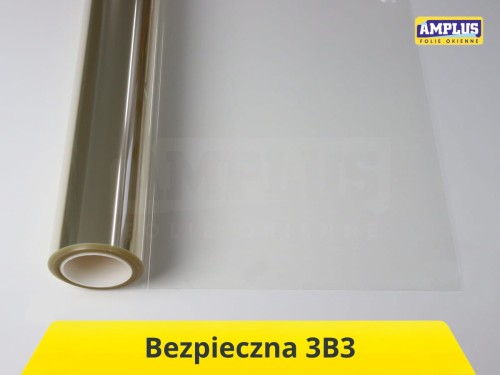
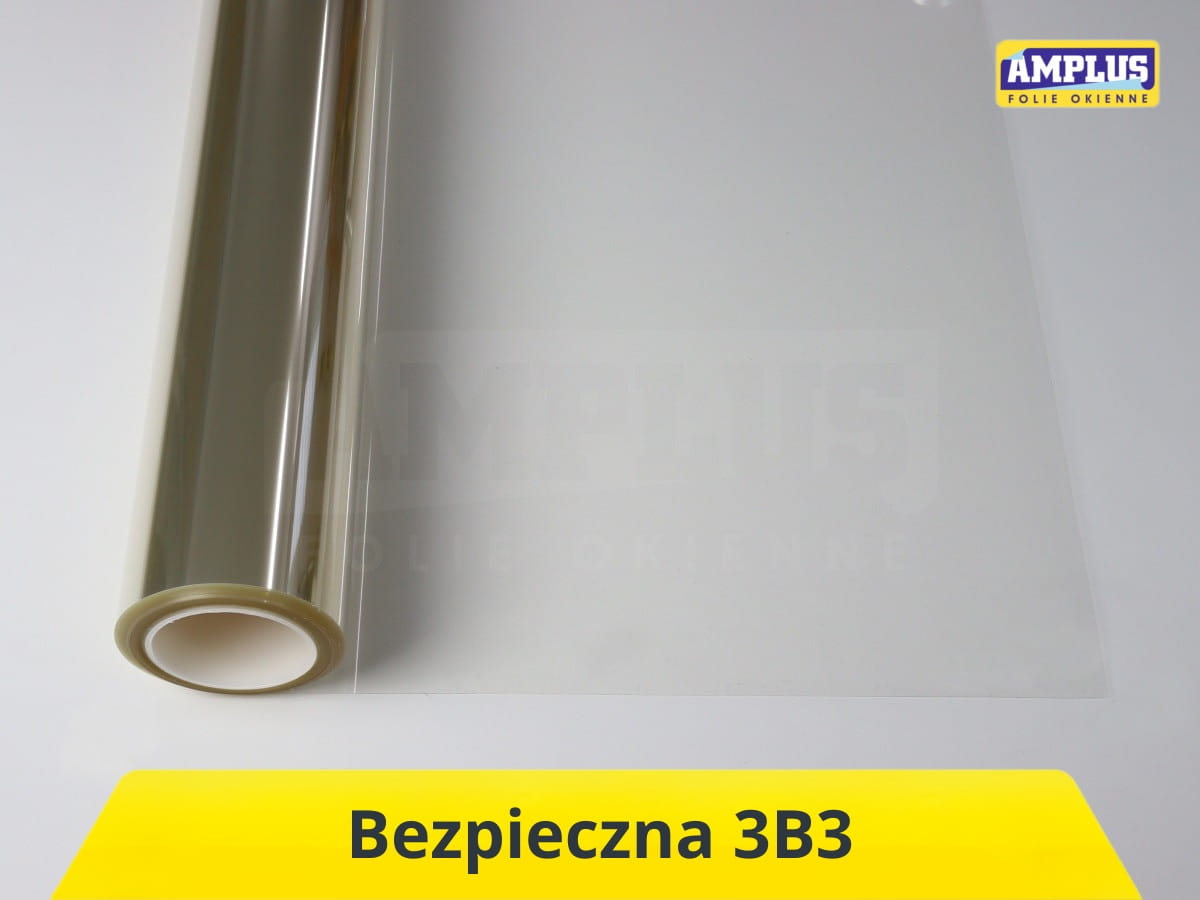

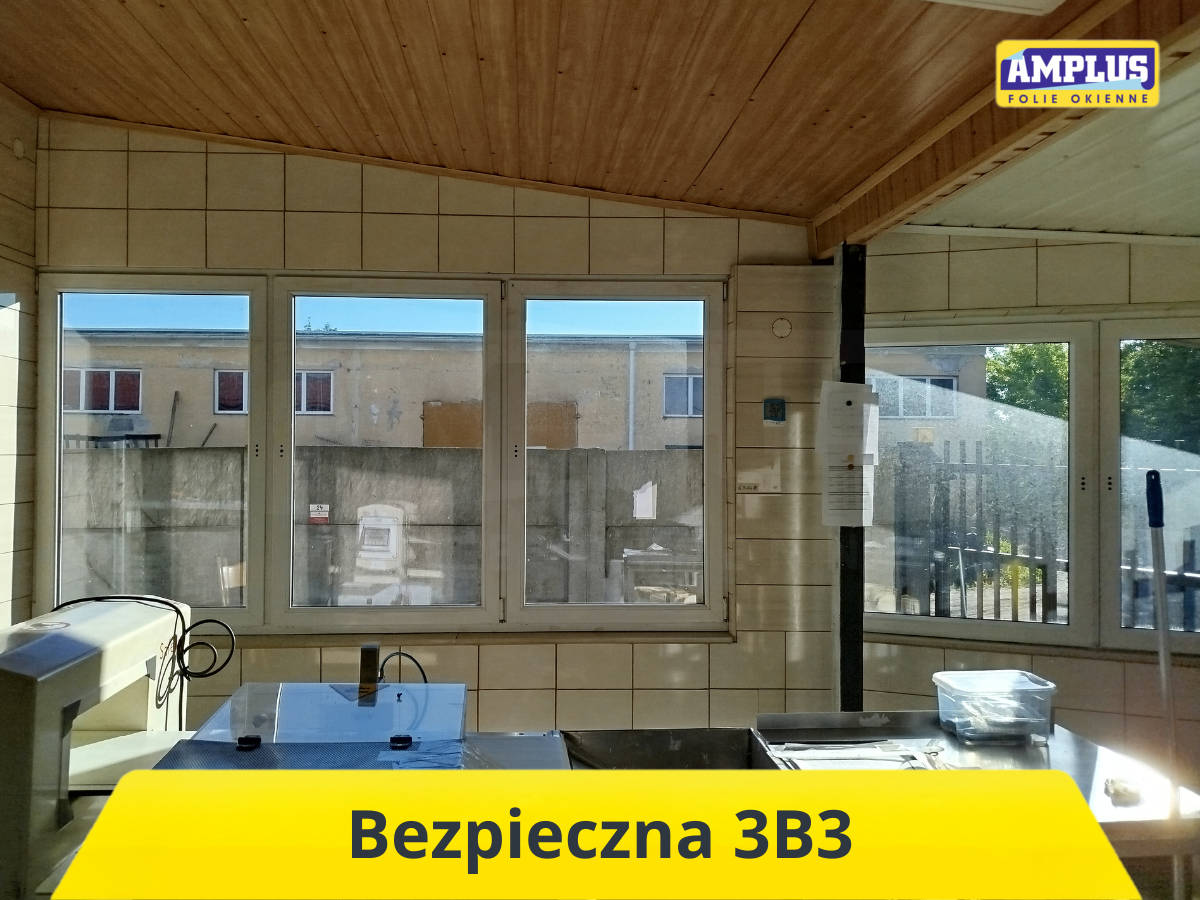
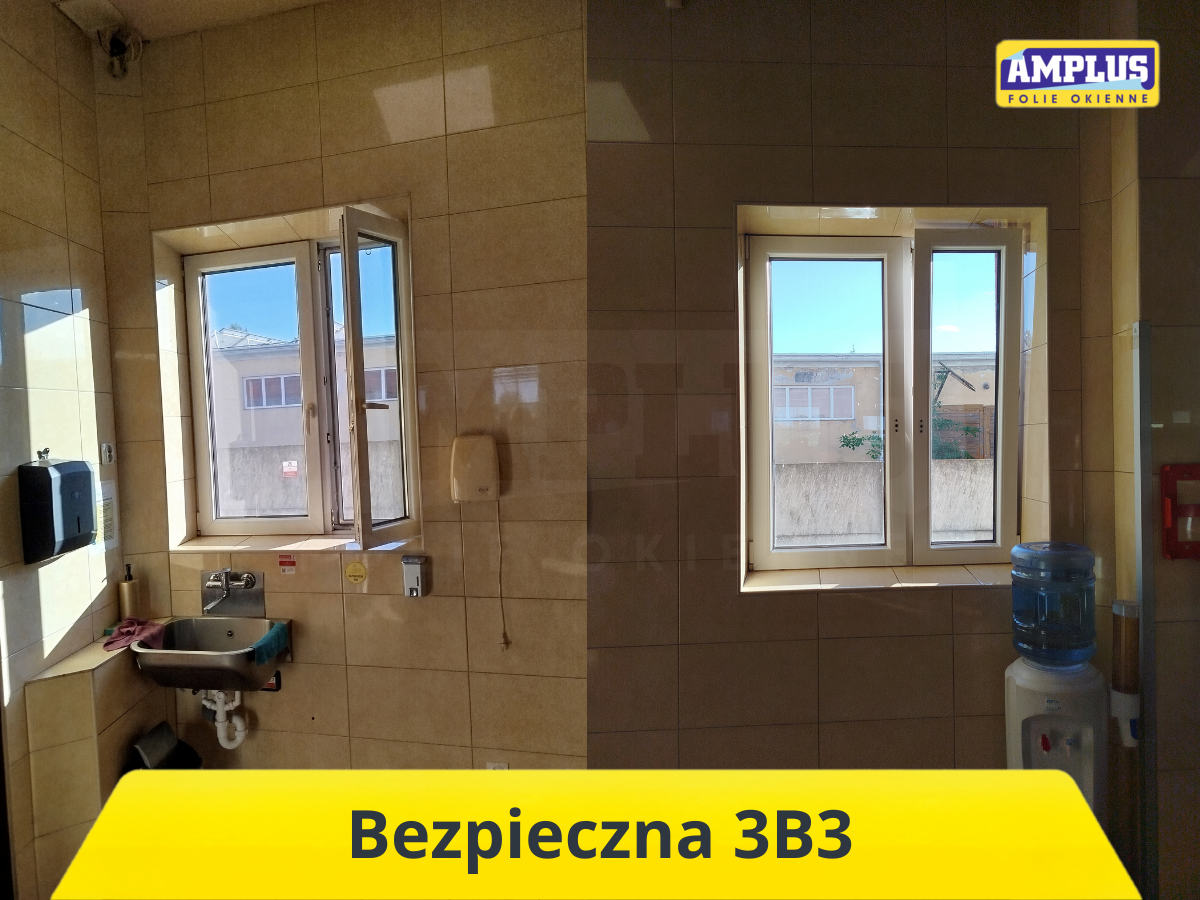
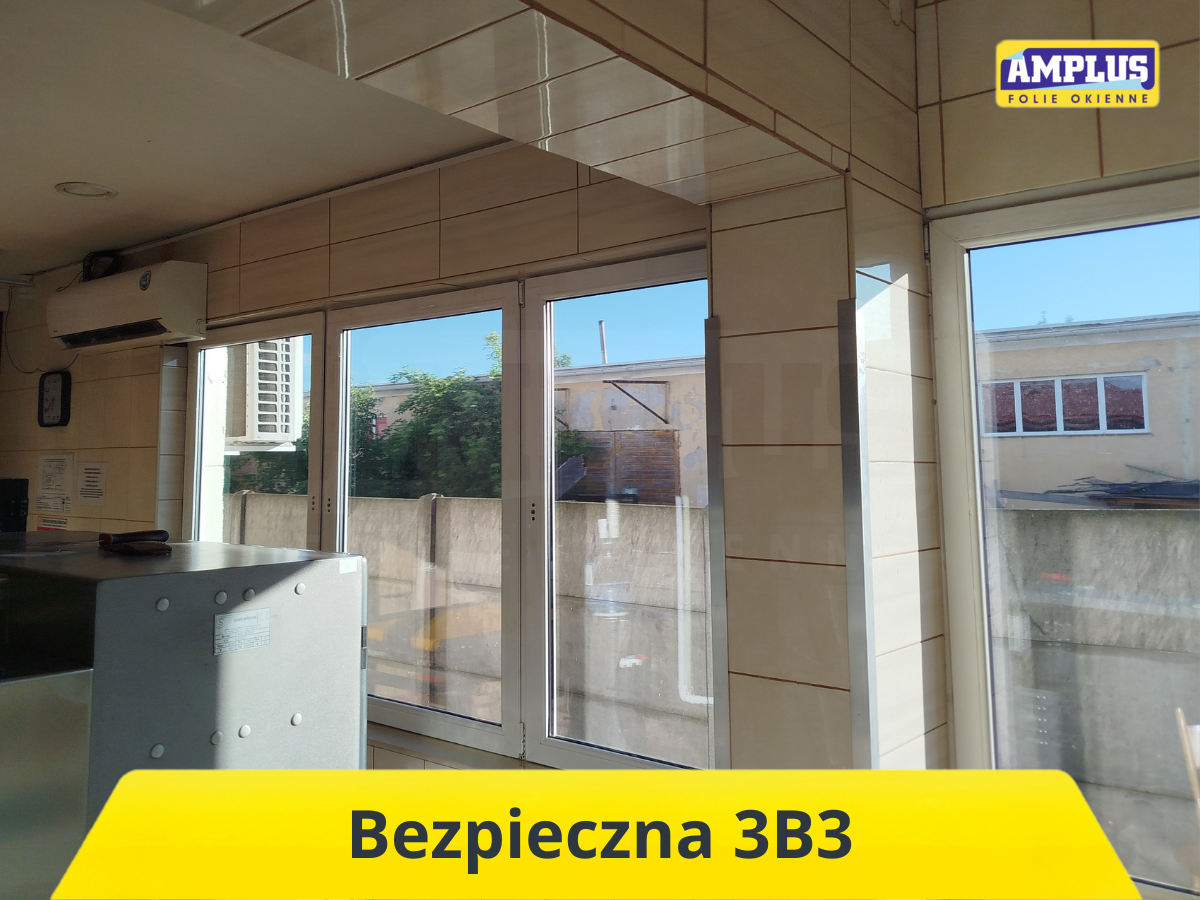
3B3 Internal HACCP Safety Window Film
3B3 safety window film is a clear internal protective film applied to glass to help limit the risk of shards scattering after breakage. It is designed for locations where broken glass could endanger people, products or infrastructure, especially food-industry environments operating under HACCP procedures and the BRC standard.
The product has an approval from the Building Research Institute and a Hygienic Certificate.
How does the 3B3 safety film work?
The film is permanently bonded to the internal surface of the glass. When the pane cracks or breaks, the adhesive layer and polyester structure help absorb impact energy and keep glass fragments attached to the film.
- The adhesive layer and polyester structure help take over part of the impact energy.
- Glass shards remain bonded to the film.
- The pane is less likely to scatter into many small fragments.
According to EN 12600, class 3B3 means that the “glass + film” set has been tested in a pendulum impact test. This test simulates a person striking the glass and helps determine how the glass breaks and how the fragments behave. In practical use, the aim is controlled breakage without dangerous glass spray.
Four benefits of 3B3 HACCP (BRC) safety window film


3B3 internal HACCP safety window film is used mainly in the food industry. The source description states that the film meets the requirements of the European Union directive and the HACCP system, and that it also meets the BRC standard.
Applications
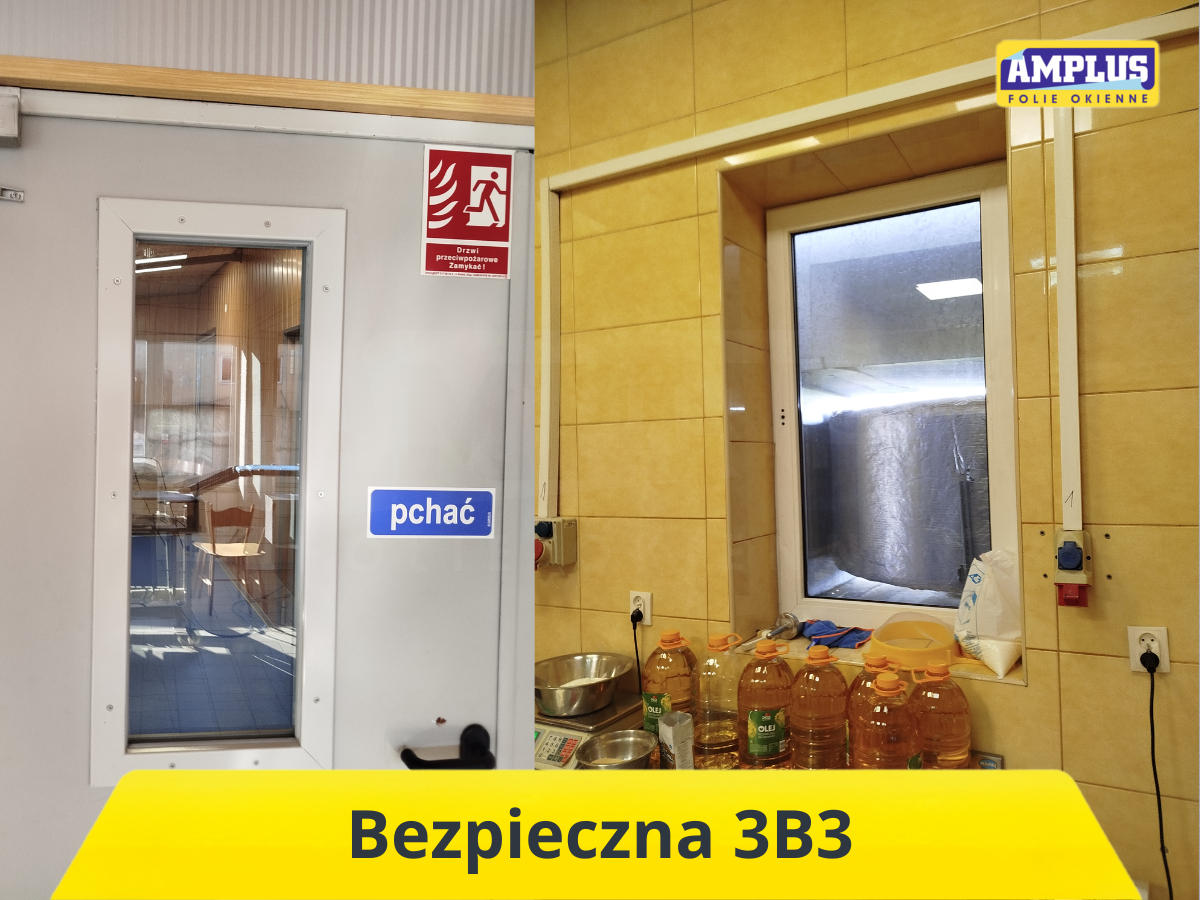
Food industry environments (HACCP, BRC)
- production halls,
- food storage areas,
- cold rooms and freezers,
- packing and confectioning zones,
- shops and retail back rooms.
In food production and storage, preventing foreign bodies from entering the product is essential. Class 3B3 film helps reduce the risk of food contamination with glass fragments if a pane is damaged.
Public and commercial buildings
- schools and kindergartens,
- medical and care facilities,
- offices and public administration buildings,
- sports facilities.
In high-traffic areas, the film helps reduce the risk of cuts if someone accidentally hits the glass.
Mirrors
- front-side installation on mirrors to help prevent fragments from scattering if the mirror cracks, for example in gyms, changing rooms and public bathrooms.
Safety classification – what does 3B3 mean?
EN/PL 12600 classifies safety glass according to how the glass breaks and how it behaves after impact. Classes such as 3B3, 2B2 and 1B1 refer to the result of the impact test and the way the broken glass remains controlled.
You may still encounter older markings such as O1 or O2. The source description explains that these are withdrawn classes and are not covered by current safety-glass classification requirements. They were tested according to different criteria, including the use of an approximately 4 kg ball, so they are not comparable with the present pendulum impact test using a 50 kg impact body.
For investments in food-industry facilities, it is worth checking that the safety class is confirmed by up-to-date documentation.
Product limitations
This film does not make glass burglary-resistant. Burglary-resistance is a different classification under EN 356, with classes such as P1–P8.
It does not structurally reinforce the window frame. Its role is to help control glass fragments after breakage.
The product is intended for internal installation. Exterior applications require other types of window film.
Can the film be ordered cut to size?
Yes. In addition to sales by running metre, ready-cut pieces can be prepared for a specific pane size. This can shorten installation time and reduce material waste.
 Safety
Related products


Product reviews (0)
All reviews (positive and negative) are displayed. We don't verify that they come from customers who have purchased the product.


