

Faraday 720 Anti-Eavesdropping Shielding Window Film – Lite Solar
 5
5
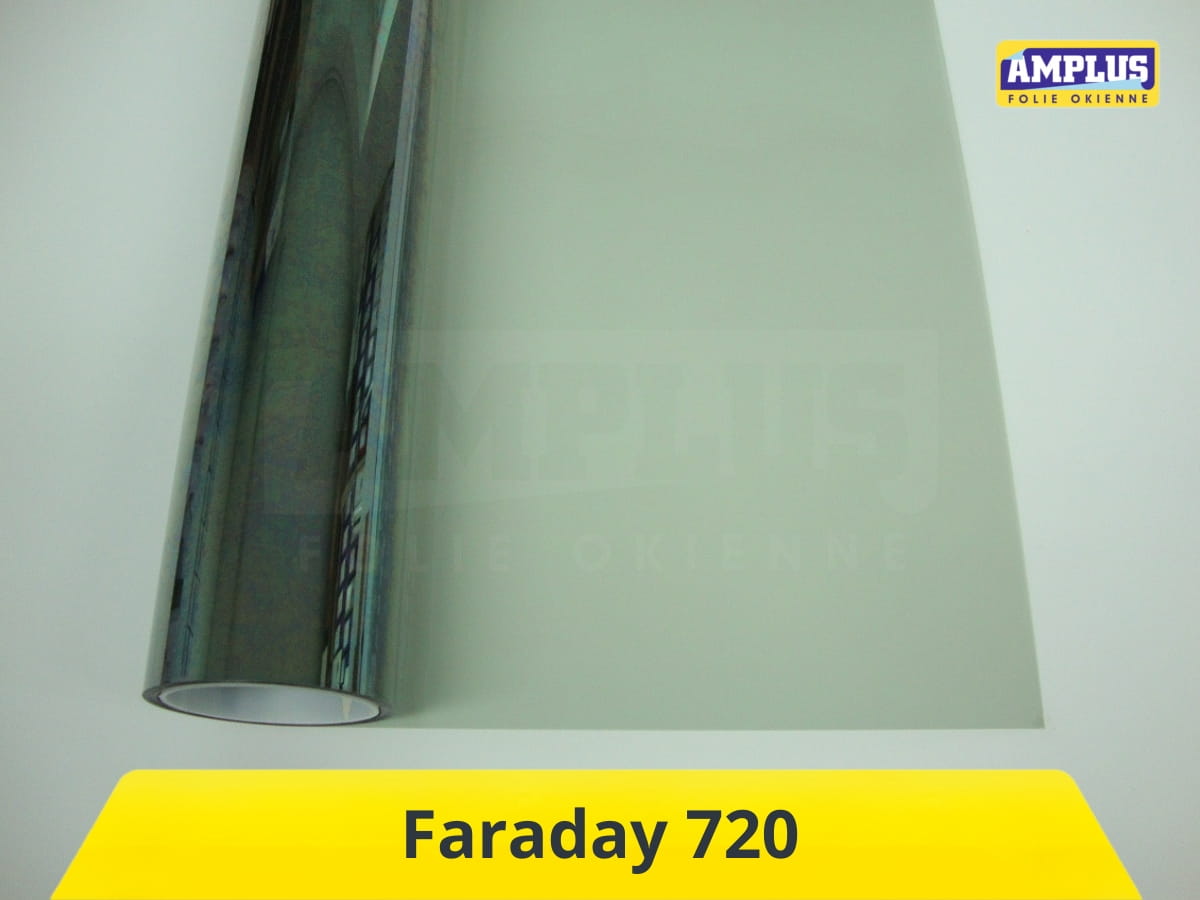
Faraday 720 Anti-Eavesdropping Shielding Window Film – Lite Solar
Faraday 720 anti-eavesdropping window film is an interior shielding film designed to help protect rooms against the uncontrolled transmission of electromagnetic signals through glass. It is intended for windows and internal glass surfaces in areas where conversations, data exchange and wireless communication require a higher level of confidentiality.
The film is transparent and is applied to the inner side of the glass. It is a polyethylene window film with a special shielding filter. This filter, together with conductive deposited layers, gives the film its signal-screening properties while keeping the glass visually clear. From the room side, the conductive layers may create a subtle shine, which is a normal visual effect of this type of shielding film.
According to the source data, Faraday 720 attenuates electromagnetic radiation in the range up to 5 GHz with an effectiveness of 30 dB at 1 GHz. This makes it suitable for projects where the aim is to reduce the risk of wireless signals leaving or entering a protected room through glazing.
How Faraday 720 helps secure glass against signal leakage
Standard glass does not provide the same signal barrier as solid walls. In many buildings, windows are therefore one of the weakest points when confidential information is discussed or transmitted inside a room. Faraday 720 shielding film is used to improve this weak point by adding a signal-reducing layer directly to the glass.
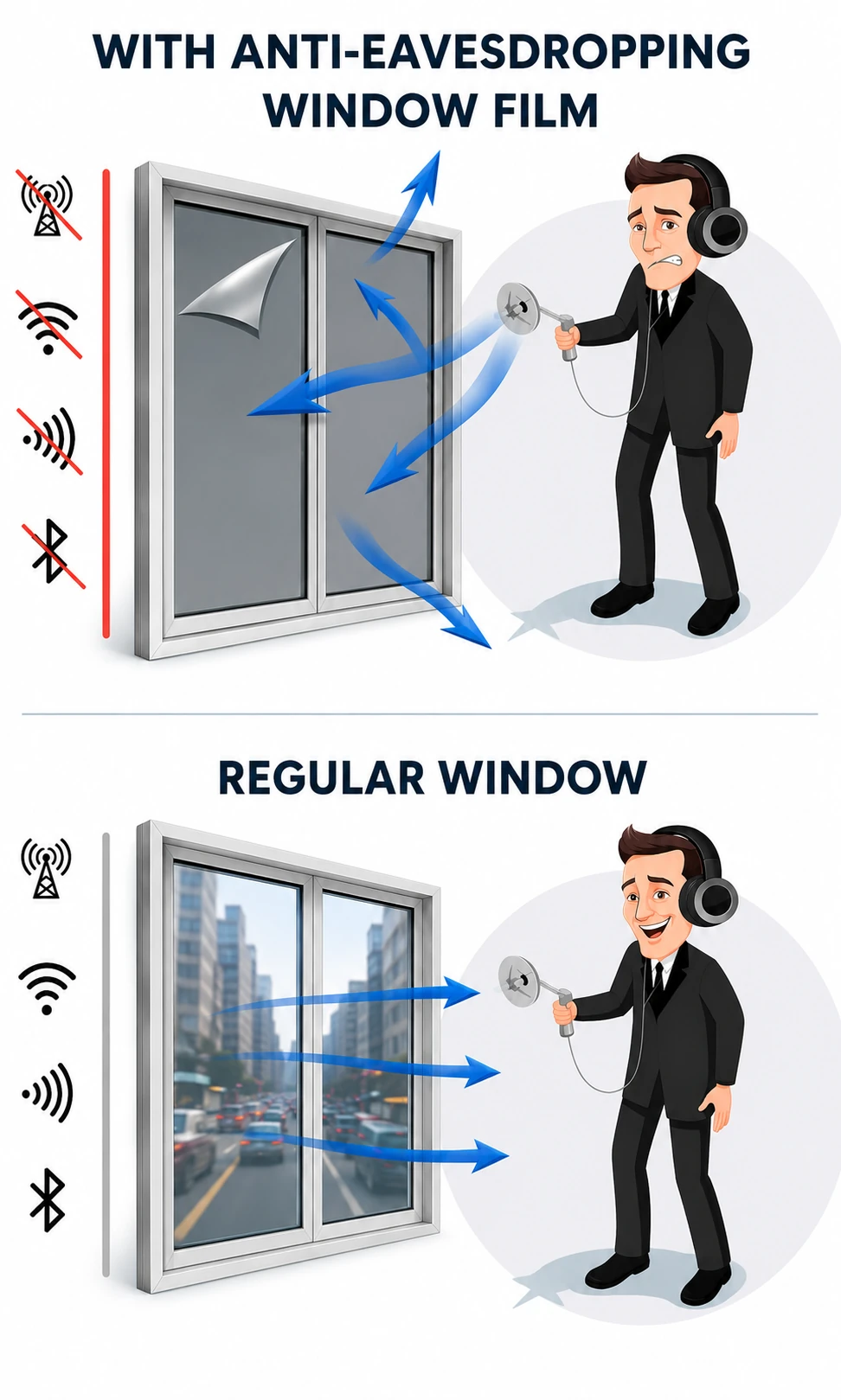
The film is designed to limit microwave-range radio signals transmitted from the room to the outside. In practice, this helps reduce the risk that unauthorised people or devices outside the building could receive signals from equipment operating inside the protected space.
It is also intended to make it more difficult for external microwave-based spying, locating or identification devices to work through the protected glass. The film reduces the ability of such radiation to pass through the window, helping turn the glass into a more controlled part of the room’s security concept.
Designed for confidential interiors
Faraday 720 is not a decorative privacy film. Its main purpose is electromagnetic shielding through glass, especially where wireless signals, confidential data and internal communication should be better protected.
The final shielding result can depend on the whole room structure, the type of glazing, the size of the protected area and the remaining unprotected openings or technical penetrations.
Protection against wireless network and data interception risks
Faraday 720 is used where uncontrolled signal transmission may create an information security risk. The film helps reduce the possibility of an unauthorised person outside the room connecting to, monitoring or attempting to interfere with an internal wireless network through the glass.
This is especially relevant for spaces where WLAN, Bluetooth-type communication and other wireless signals are used close to windows. The original product description refers to microwave ranges such as 2.4 GHz and 3.7 GHz, which are important in the context of wireless communication and signal control.
By limiting the passage of electromagnetic waves through glazing, Faraday 720 anti-eavesdropping film can help reduce the risk of hacker activity aimed at wireless networks and can make the interception of important or confidential company information more difficult.
Where Faraday 720 shielding film is used
Faraday 720 is intended for locations where windows should not remain an easy path for signal leakage. It is used in anti-eavesdropping installations and in rooms where information protection is part of the operating standard.
- Government and administrative institutions: offices, meeting rooms and departments where sensitive conversations or internal communication take place.
- Military, police and public-security facilities: areas where reducing the risk of signal interception is important for operational confidentiality.
- Large companies and corporate offices: boardrooms, management offices, project rooms and spaces where strategic business information is discussed.
- Financial and legal environments: rooms where client data, negotiations, contracts or confidential documentation may be discussed near windows.
- Research and development areas: interiors where prototypes, research data, intellectual property or product plans should be better protected.
- Conference and training rooms: spaces where wireless devices are used and where the glass surfaces should be included in the security plan.
Appearance and installation side
The film is transparent and is installed inside the room on the glass. It does not work like a visual privacy film or a decorative frosted film. Its role is to add a conductive shielding layer that helps reduce signal transmission while keeping the window usable and visually discreet.
Because the film contains deposited conductive layers, the room-facing side can show a delicate reflective effect. This is connected with the shielding structure of the film and should be expected with this type of solution.
Why glass should be included in a security concept
In modern offices and institutions, confidential information is often exchanged wirelessly. Laptops, phones, access points and Bluetooth devices can all generate electromagnetic emissions. If the room has large windows or glass walls, these surfaces may become a path through which signals can leave the protected area.
Faraday 720 interior shielding window film helps address this issue by adding a signal-attenuating layer to the glazing. It is therefore a practical choice where the objective is not only physical security, but also better control over the electromagnetic environment of the room.
The film is particularly useful where replacing glazing or redesigning the room would be difficult, but the window still needs to be considered as part of an anti-eavesdropping strategy.
Key benefits of Faraday 720
- Electromagnetic shielding for glass in the range up to 5 GHz.
- 30 dB attenuation at 1 GHz according to the product data.
- Interior installation on windows and glass surfaces inside rooms.
- Transparent appearance with a subtle interior-side shine from conductive layers.
- Support for anti-eavesdropping installations in companies, institutions and protected offices.
- Reduced risk of wireless signal leakage through windows and glass partitions.
- Additional protection for confidential WLAN and wireless communication when glass is a weak point in the room.
Important note
The effectiveness of any shielding installation depends on the full construction of the room, not only on the film. Walls, doors, frames, ventilation openings, cable penetrations and unprotected glass can all influence the final level of signal reduction.
For rooms with high confidentiality requirements, the film should be considered as one element of a broader security concept.
Faraday 720 for professional anti-eavesdropping projects
Faraday 720 is a specialist anti-eavesdropping window film for users who need more than standard sun protection or visual privacy. Its purpose is to help protect information by reducing electromagnetic signal transmission through glazing.
If important discussions, wireless data exchange or sensitive business processes take place near windows, this film can help make the glass less vulnerable to signal leakage. It is a practical solution for professional interiors where information security, controlled communication and protection against unauthorised signal interception are important.
 Safety
Related products


Product reviews (0)
All reviews (positive and negative) are displayed. We don't verify that they come from customers who have purchased the product.


