

P1 Exterior Protective Security Window Film
 4.91051
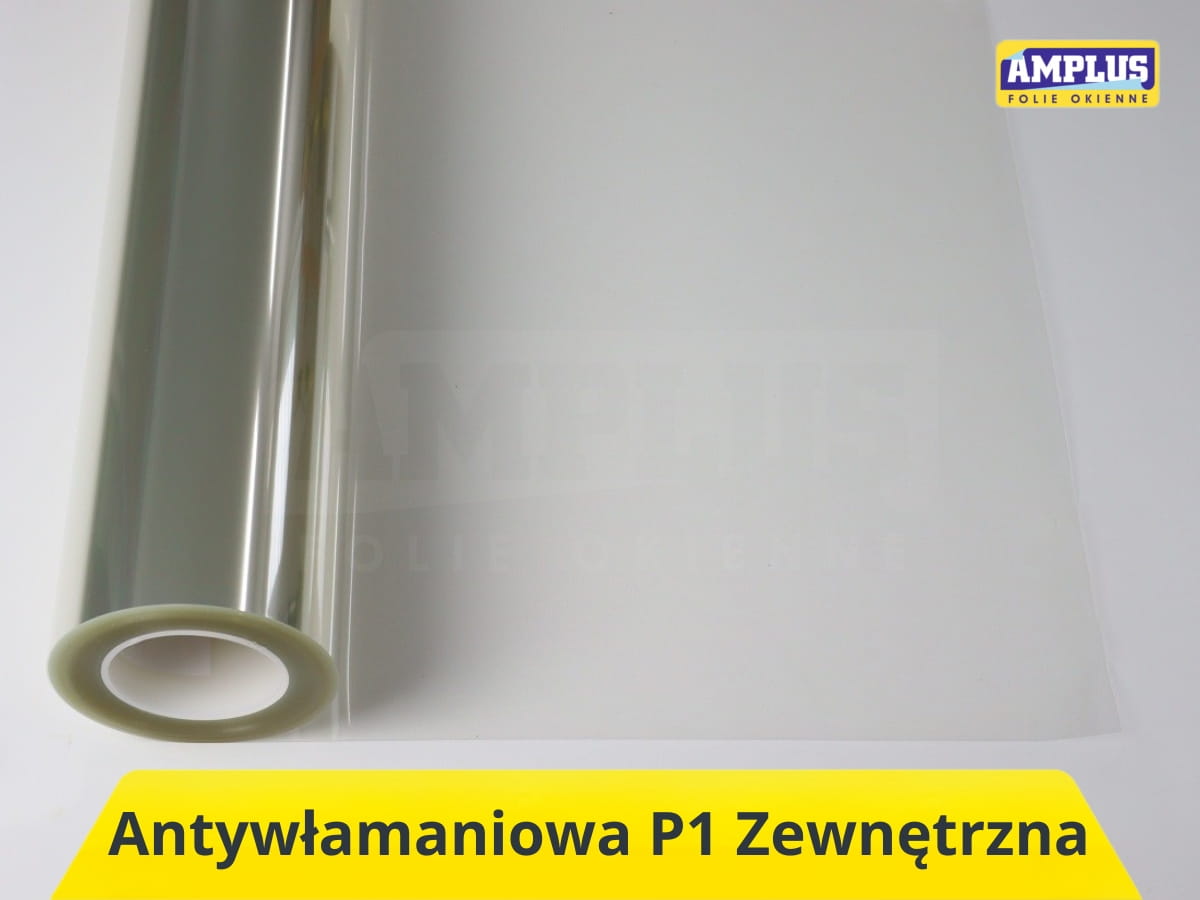
P1 Exterior Protective Security Window Film
P1 class exterior security film is a protective film for glass, intended to help protect the pane against breakage and make forced entry into the building more difficult. After application, it creates an additional strengthening layer on the glass and helps make penetration harder.
If interior installation is possible, the interior P1 security film is recommended because it is more effective in action.
How does security window film work?
P1 class security film is a multi-layer polyester film with increased thickness and a strong acrylic adhesive. After it is applied to the glass, it forms a connected system with the pane and changes the way the glass reacts to impact.
1. Dispersion of impact energy
Ordinary glass, when hit in one point by a stone or a hard tool, cracks and can quickly form an opening. The film layer takes part of the impact energy and spreads it over a larger area of the pane. As a result, the glass does not immediately fall into loose pieces.
2. Stabilisation of the cracked pane
When the glass cracks, the fragments remain attached to the film. The pane may crack, but it usually does not fall out of the frame immediately and does not create an easy passage into the room. This is the key mechanism that makes quick entry more difficult.
3. Making an opening more difficult
To get inside, the intruder must repeatedly hit the same place or cut the film with a tool. This requires more time and generates noise, which in practice can reduce the effectiveness of a break-in attempt.
4. Reduced risk of injury
Because glass fragments remain bonded to the film, the risk of glass splinters scattering and injuring people near the window is reduced.
Is security window film worth using?
Tests confirm that security film can significantly extend the time needed to force entry into a building and make a break-in more difficult. In practice, when a burglar cannot get inside within the first few minutes, the attempt is often abandoned in favour of an easier target.
The film has also been tested by an independent Polish research point. The tests confirm that glass protected with the film is resistant to a dropped 4 kg ball from a height of 1.5 m without falling apart.
The film has the following approvals:
- Building Research Institute approval;
- Hygienic approval.
Applications
Security films can be installed on:
- windows in flats and houses;
- glazed doors;
- shop windows;
- glazing in offices and service premises.
This solution is useful where the appearance of the facade must remain unchanged. After installation, the film is practically invisible and does not change the look of the glass.
Does the film replace bars or anti-burglary glass?
Security film is often used as an aesthetic alternative to bars because, after installation, it remains practically invisible and does not change the appearance of the facade.
It is important to note that P1 or P2 class film is tested for impact resistance in the same test system as anti-burglary glass in the corresponding classes, according to EN 356. This means that glass protected with the film is tested in the same way as laminated glass of a given class, including by dropping a steel ball of a specified mass from a specified height and assessing whether a through-hole is created.
However, two issues should be distinguished:
- Scope of the test – the test assesses the resistance of the glazing to penetration.
- System construction – anti-burglary glass is factory-laminated, while in the case of film, the quality of installation and the condition of the window frame are very important.
The film does not strengthen the fittings or the construction of the frame. Its role is primarily to make it more difficult and time-consuming to force the glass, not to provide complete resistance for the whole window as a building element.
In practice, this means that a properly selected and correctly installed film may achieve penetration-resistance parameters comparable with glass of the same normative class. However, the effectiveness of the entire protection system also depends on the quality of the film installation and the remaining elements of the window joinery.
When is exterior P1 film used?
The exterior version is chosen when access to the interior side of the glass is limited or when installation from inside the room cannot be performed correctly. The product is intended to add a protective layer to the glass from the outside and to make it more difficult to break through the pane quickly.
Where both options are possible, the interior P1 version remains the preferred solution, as stated above, because interior installation gives better protection in action. The exterior version is therefore useful mainly for situations where the installation conditions require outside application.
Discreet protection without changing the facade
One of the main advantages of security film is that it does not visibly change the building facade. It can improve the behaviour of the glass after impact while keeping the glazing clear and visually neutral.
This is especially useful for shop fronts, offices, service premises and residential buildings where external bars would be unattractive or not accepted aesthetically. The film is intended to reinforce the pane while keeping the original look of the window.
What the impact test means in practice
The test with a 4 kg ball dropped from a height of 1.5 m shows that the protected glass can resist a strong point impact without falling apart in the same way as unprotected glass. The film helps keep cracked fragments attached, which makes the pane harder to clear from the frame.
This laboratory result should be understood as a test of the protected glazing itself. It does not mean that every window becomes fully burglary-proof, because the final security level also depends on the frame, fittings, installation quality and the overall condition of the window.
Practical effect during a break-in attempt
In a real break-in attempt, the aim of the film is to create delay. More strikes, more noise and more time are needed to open a path through the glass. This delay can be valuable because it increases the chance that the attempt will be noticed or interrupted.
For this reason, P1 exterior security film is suitable where a discreet additional barrier is needed, but the visual appearance of the glass should remain as close as possible to the original.
See also
 Safety
Related products


Product reviews (0)
All reviews (positive and negative) are displayed. We don't verify that they come from customers who have purchased the product.


